Posts

(C6) Valuing Organizational Information

Image
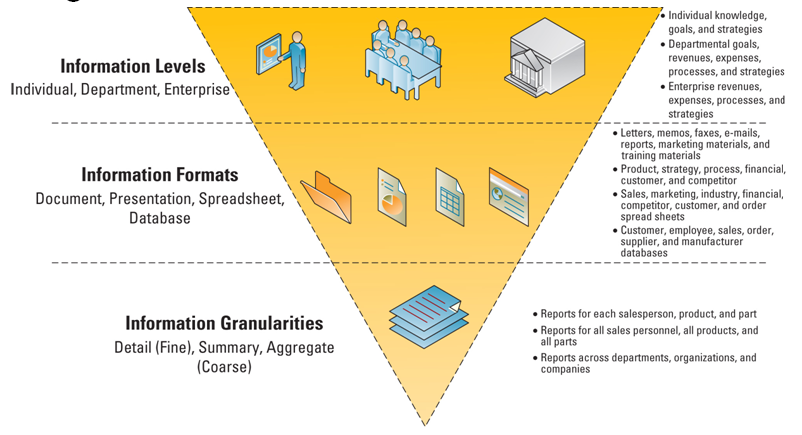
Value of Transactional and Analytical Information Value of Timely Information Real-time information - immediate up to date information Real-time system - provides real-time information in response to query requests Value of Quality Information Characteristics of quality information

(C5) Organizational Structures That Support Strategic Initiatives

IT Roles and Responsibilities Chief Information Officer (CIO) - oversees all uses of IT - responsible for ensures the strategic alignment of IT with business goals and objective Chief Technology Officer (CTO) - responsible for ensuring the throughput, speed, accuracy, availability and reliability of IT Chief Security Officer (CSO) - responsible for ensuring the security of IT systems Chief Privacy Officer (CPO) - responsible for ensuring the ethical and legal use of information Chief Knowledge Officer (CKO) - responsible for collecting, maintaining, and distributing the organization’s knowledge Ethics -the principles and standards that guide our behaviour towards other people Issues affected by technology advances : - Intellectual property Intangible creative work that is embodied in physical form - Copyright Legal protection afforded an expression of an idea, such as song, video game and some types of proprietary document - F...
(C4) Measuring the Success of Strategic Initiatives

Image

(C3) Strategic Initiatives for Implementing Competitive Advantages -

Image

(C2) Identifying Competitive Advantages

Image
How to analyze and develop competitive advantages in the industry? Three common tools - Porter ’s Five Forces Model - Porter’s three generic strategies - Value chains 1.  Porter ’s Five Forces Model   Buyer power - HIGH (customers have many choices of whom to buy from) (as a seller) - LOW (few choices) How to lower - Loyalty programmes - Switching cost   Supplier power - HIGH (buyers have few choices of whom to buy from) (as a supplier) - LOW (buyers have more choices)   Threat of substitute products or services - HIGH (many alternatives to a product or service) (as a seller) - LOW (less alternatives to choose)   Threat of new entrants - HIGH (easy for new competitors to enter market) (as a seller) - LOW (there are barriers to enter market)   Rivalry among existing competitors - HIGH (competition is fierce) (as a seller) - LOW (competition is more complacent) ...

(C1) Business Driven Technology

Image
What will you learn at the end of the chapter? Compare Management Information Systems (MIS) & Information Technology (IT) Relationship among people, information technology and information Identify 4 different department in a typical business and explain how technology helps them work together Compare 4 types of organizational information cultures What are the business functions (departments) that receive the greatest benefits from information technology Business Driven Technology * IT department is responsible for performing the MIS = Accounting Department is reponsible for performing the accounts payable and accounts receivable functions INFORMATION TECHNOLOGY BASIS Data - raw facts describing the charcteristic of an event, e.g. name, phone number, id number Information - data converted into a meaningful (HELPS IN DESICION MAKING) and useful context, data mining; digging out the information Business intelligence - applications and technologies that are us...
